Voice Search and Web Design: Preparing for the Next Trend

More people now talk to their devices instead of typing. They ask a phone for a nearby café, ask a smart speaker for opening hours, or dictate a question while driving. Each of those questions is a search — and if your website is not written and structured in a way voice search can use, your business may simply never be mentioned in the answer.
The good news is that voice search does not require a separate website or an expensive rebuild. It rewards sites that are clear, well organised and written in natural language — the same qualities that make any website good. Here is what changes, and how to prepare.
How Voice Search Differs from Typing
Typed searches are shorthand: “plumber Bristol prices”. Spoken searches are full sentences: “How much does a plumber in Bristol charge to fix a leaking tap?” Voice queries are longer, more conversational and very often questions — who, what, where, when and how.
They are also frequently local and urgent. Someone asking out loud is often ready to act: to visit, to call or to buy. That means voice search favours businesses whose sites answer specific questions clearly and whose local details are easy to find and up to date.
Voice assistants are only one of the shifts shaping small business websites at the moment — our roundup of web design trends for 2026 covers the wider picture.
Write the Way People Speak
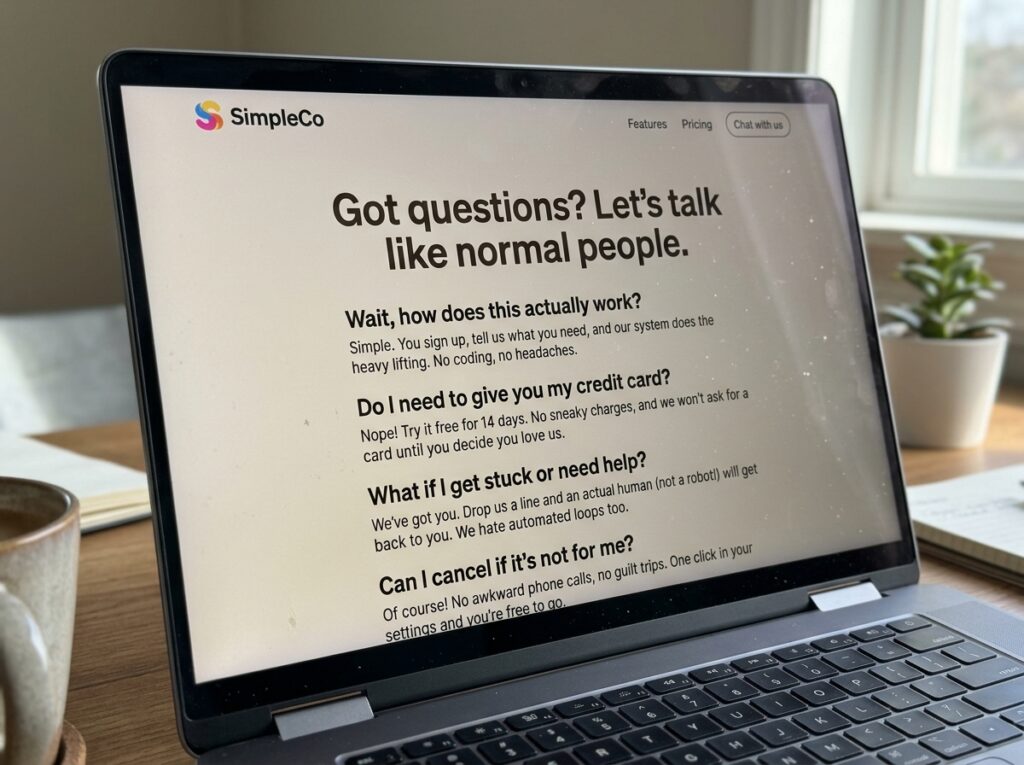
The simplest preparation is in your wording. Read your key pages aloud. If a sentence sounds like a brochure rather than something a person would actually say, it is probably too stiff for voice search as well — and usually too stiff for your human readers, too.
Add the questions your customers really ask — the ones you hear on the phone and in messages — to your pages, and answer them in plain, complete sentences. A short answer written the way you would say it is exactly the kind of passage a voice assistant can read back.
- Use natural headings. Phrase some headings as the questions customers ask.
- Answer directly. Put the short answer first, then add the detail below it.
- Keep sentences short. Long, tangled sentences are hard to read aloud and hard to extract.

Structure Pages for Clear Answers
Voice assistants usually give one answer, not a list of ten links. To be that answer, your content needs to be easy to scan and extract: clear headings, short paragraphs and one idea per section. FAQ pages work particularly well because they match the question-and-answer shape of spoken search.
This is where design and content meet. A page that mixes three topics under one vague heading is hard for software to interpret, however good it looks. It helps to understand the UX vs UI differences that shape how a page is organised and presented — a clear journey and a clear layout help human visitors and voice assistants in exactly the same way.
Local Search Matters More
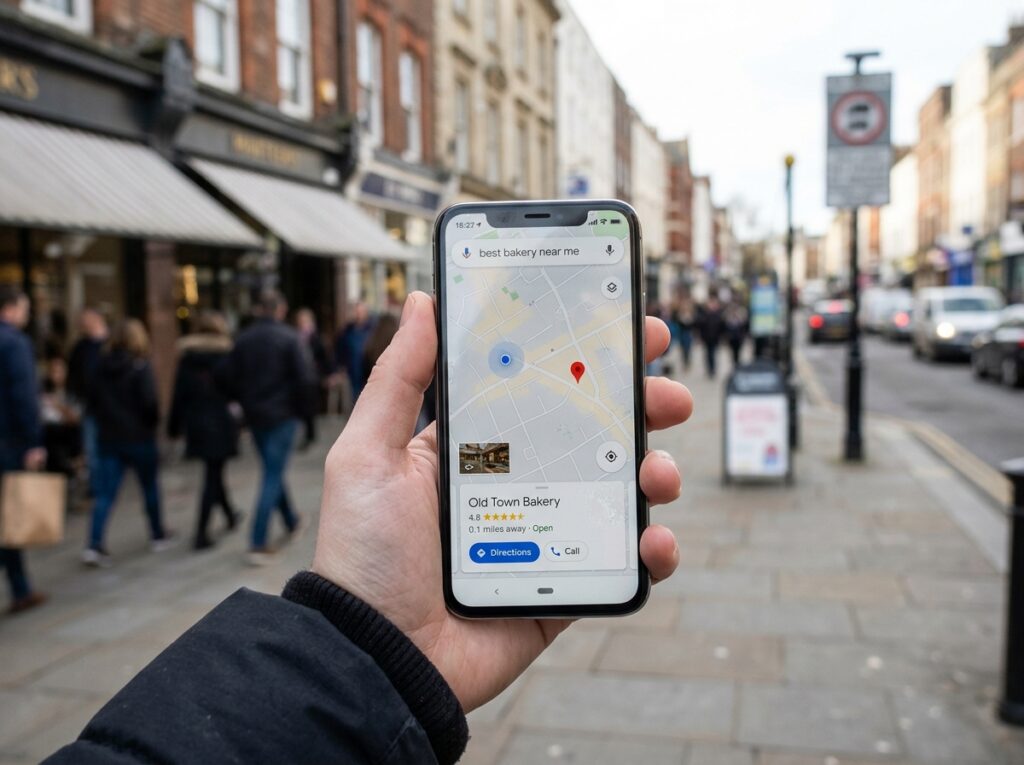
Because so many voice searches include “near me” or a place name, your local information has to be accurate and consistent. Your business name, address, phone number and opening hours should match everywhere they appear, including your own website and your business listings.
If your details are out of date in one place, a voice assistant may read out the wrong hours or send a customer to a competitor whose information is tidier. Checking and correcting your details takes an afternoon, and it is one of the highest-value voice search tasks you can do.
The Technical Basics Still Apply
Voice search does not change the fundamentals. Your site still needs to load quickly, work properly on phones and be secure, because most voice searches happen on mobile devices. A slow or broken mobile page is unlikely to be chosen as the answer, however well it is written.
Beyond that, avoid burying important information in images or PDFs where search tools cannot read it. If opening hours, prices or service details matter, put them in ordinary text on the page itself.
Frequently Asked Questions
Do I need a separate voice search strategy?
No. Treat it as part of good web design: natural wording, clear structure, accurate local details and a fast, mobile-friendly site.
Should I rewrite my whole website?
Rarely. Start with your most visited pages and your FAQ content, then extend the same approach to other pages as you update them.
Does voice search matter for my kind of business?
If customers ever search for you locally, or ask questions before buying, then yes — and that covers most small businesses.
A Clearer Site Is the Whole Strategy
None of this asks you to chase a gimmick. Voice search simply rewards the websites that were already trying to be clear, helpful and easy to use. If you would like help making your website easier for customers — and assistants — to understand, Designores provides web design services for small businesses. Get in touch and tell us about your site.