
Why Consistent Branding is Essential for Business Growth

Think about the last business you bought from more than once. You probably recognised it instantly — from a colour, a logo, or its packaging. That is consistent branding, repeated until the business feels familiar.
Many small businesses treat branding as a one-off job: get a logo made, launch a website, and move on. But a brand is built in small moments. Every post, invoice, sign and delivery box either reinforces the same impression or weakens it. When they line up, customers remember you, trust you and come back. When they do not, even a good business can look forgettable.
Here is what branding consistency means, why it matters, and how to improve yours.
What Consistent Branding Actually Means
Consistent branding does not mean every design must look identical. It means these elements stay recognisable wherever a customer meets you:
- Your logo — the same main version, not stretched, recoloured or replaced with an old draft.
- Your colours — a small, fixed palette, not whatever shade looked close enough.
- Your typography — the same heading and body fonts throughout.
- Your imagery — photographs and graphics with a similar style and mood.
- Your voice — the same personality in words: warm, expert, or playful.
- Your promise — the same message about who you help and why you are different.
One business, one clear impression: a customer seeing your post on Monday, website on Wednesday and packaging on Friday should feel they met the same organisation.
What Consistency Looks Like Across Every Touchpoint
A touchpoint is any place a customer experiences your brand.
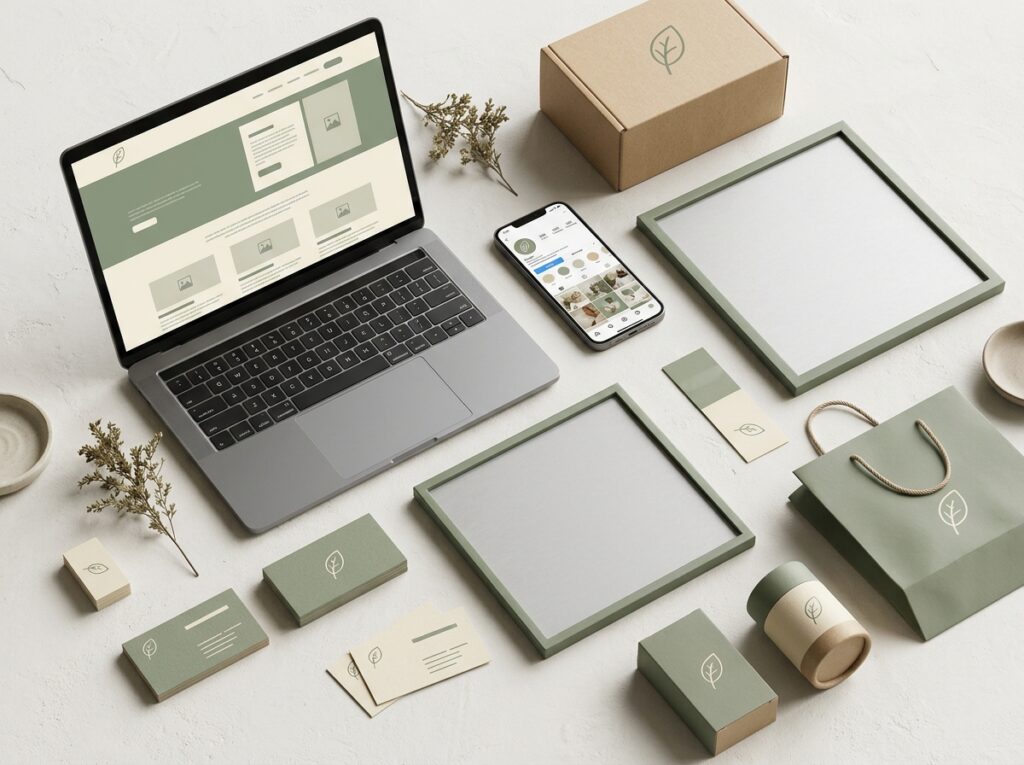
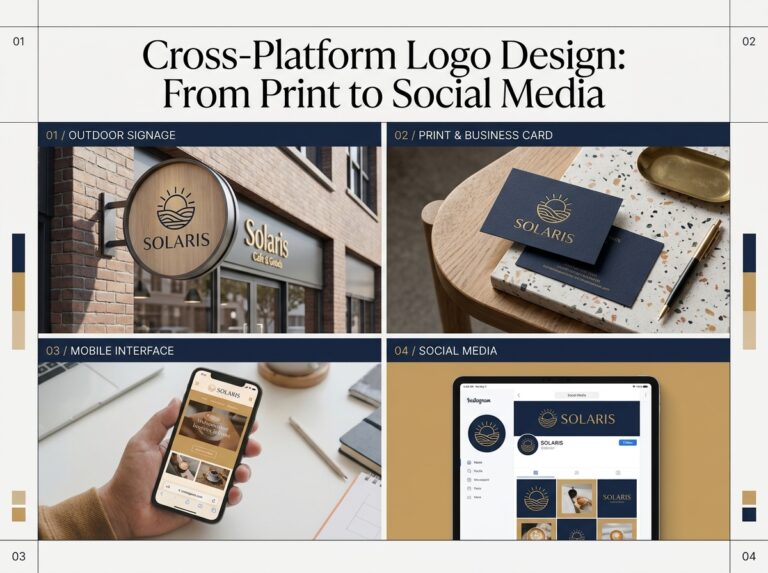
Website and social media
Your website is the reference point people check before buying, so its logo, colours, fonts and voice should match your social profiles, adverts and emails. The same palette and post templates make social content recognisable in a busy feed — often in under a second.
Print, packaging and in person
Business cards, labels, boxes, signage and invoices are easy to overlook, yet they are physical proof of your brand. A polished website followed by a mismatched delivery box can undo much of that good work.
Recognition: Being Remembered Is Half the Sale
Most customers do not buy the first time they see you. They buy when a need appears — and then choose from the businesses they remember.
Repetition is how memory works. Seeing the same colours, logo and style repeatedly gives customers something solid to recall. If your appearance keeps changing, every encounter feels like meeting a stranger.
This matters especially for small businesses, which rarely have the budget to be everywhere. Consistency makes every advert, post and referral build on the last.
Trust, Professionalism and Loyalty
Recognition gets you remembered. Consistency gets you trusted.
A tidy, unified presentation suggests a reliable business behind it. A mismatched logo, three different fonts, or outdated signage raises a quiet doubt: if the details here are careless, will the work be careless too? Branding cannot fix a poor product, but it removes unnecessary doubt — often the real reason a visitor leaves without enquiring.
Familiarity also builds loyalty. When every experience feels connected, customers recommend you more confidently and spend more over time. Repeat customers cost less to reach, and bring new customers through word of mouth.

How Inconsistency Hurts Your Business
Inconsistency rarely destroys a business overnight. It leaks growth slowly:
- Confusion — customers are unsure the advert, shop and website are the same business, so they hesitate.
- A DIY look — old logos and random colours make an established business look temporary.
- Weaker marketing — campaigns never accumulate recognition.
- Lost sales — hesitant customers rarely complain; they choose the competitor who looked more certain.
- Wasted effort — staff and suppliers guess at colours, fonts and files.
The answer is usually not a complete rebrand. It is deciding what your brand is, writing it down, and applying it properly.
The Role of a Brand Style Guide
The simplest tool for staying consistent is a brand style guide: a short document recording your logo versions, colour codes, fonts, imagery style and tone of voice, with examples of correct and incorrect use.
Even a few clear pages save time whenever anyone creates something for you — nobody has to guess. Your logo deserves particular care here, as it is the element most often misused.
A Simple Consistency Audit You Can Do Today
Try this:
- Gather everything — website, social profiles, Google listing, advert, business card, invoice and packaging, side by side.
- Check the logo — same version, colour and quality everywhere? Remove outdated copies.
- Check colours and fonts — do they match, or merely resemble each other?
- Read the words — do you describe the business the same way in each place?
- Fix and record — correct the most-seen touchpoints first, then record the correct files in your style guide.
Repeat every six to twelve months, and after any change of website, designer or signage.
Common Mistakes to Avoid
- Rebranding too often — frequent changes reset the recognition you have built.
- Letting everyone improvise — you soon have several competing brands under one name.
- Copying trends and competitors — it dates quickly and blurs your difference.
- Updating one channel only — a new website beside old signage looks more inconsistent, not less.
- Skipping the guide — relying on memory works until someone new joins.
How Consistent Branding Drives Growth
Growth rarely comes from one dramatic moment. It comes from small advantages compounding: more people recognising you, trusting you, buying again, and recommending you.
Consistent branding supports every stage. It makes advertising more efficient, supports confident pricing, and helps a growing team present one business. Over time, scattered marketing effort becomes a recognisable brand asset that grows more valuable the longer you maintain it.

Starting from the beginning instead? Build the foundations first.
Quick Consistency Checklist
- One main logo version, used correctly everywhere.
- Old, low-quality logo files removed from circulation.
- A fixed colour palette, with codes written down.
- The same heading and body fonts in print and online.
- Website, social profiles and listings match.
- Packaging, signage and print match your digital identity.
- Tone of voice defined, with example phrases.
- A simple style guide the team can find and use.
- Templates ready for social posts, documents and invoices.
- A consistency audit booked at least once a year.
Frequently Asked Questions
How long does it take for consistent branding to work?
Recognition builds over months, not days. Your marketing may look cleaner immediately, but being recalled and chosen first grows with repeated exposure — which is why starting now, and not changing direction every few months, matters.
Does consistent branding mean I can never change my design?
No. Brands evolve. Keep the recognisable core, change deliberately, and update your main touchpoints together, rather than letting your appearance drift by accident.
Is consistent branding only important for big companies?
Quite the opposite. A large company can survive a forgettable advert because it will run a thousand more. A small business has fewer chances to be seen, so each must count — and consistency connects them into something memorable.
What should I fix first if my branding is inconsistent?
Start where customers look most: logo files, website, main social profile, and customer-facing print and packaging. Agree the correct version of each element, update those touchpoints, and record the decisions in a style guide.
Conclusion: Same Business, Same Impression, Every Time
Consistent branding is not about being rigid. It is about making a promise — through your logo, colours, fonts, images and words — and keeping it wherever a customer meets you. Do that, and recognition turns into trust, trust into loyalty, and loyalty into growth.
If you would like an experienced eye on your own consistency, Designores is a full-service design studio that has completed 1,600+ projects for 900+ companies across branding, graphic design, web design and more. Get in touch when you are ready, and we can help bring your website, social media, print and packaging together under one confident identity.





2 Comments