Branding vs. Marketing: What’s the Difference and Why It Matters
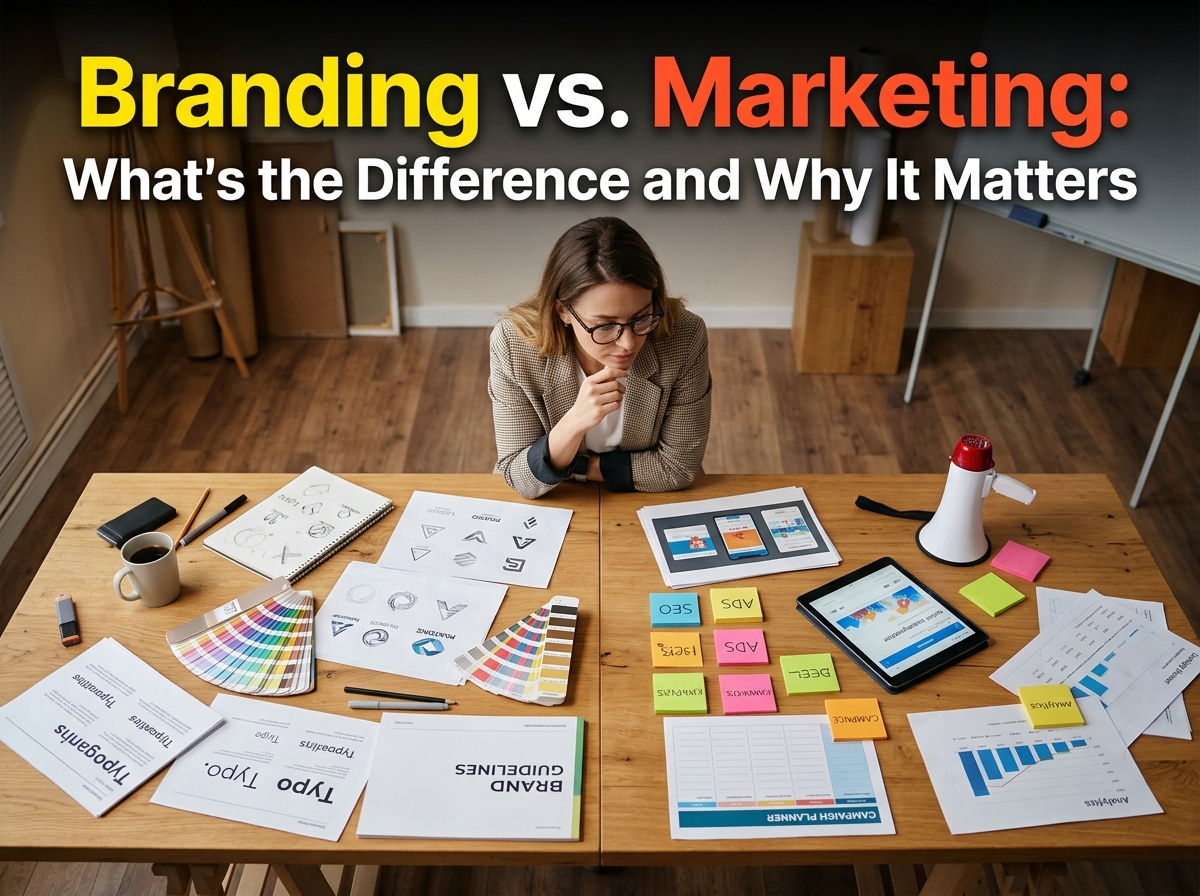
Branding and marketing are often used as if they meant the same thing. Owners ask for “branding” when they want more enquiries, or call a logo redesign a “marketing refresh”. They are closely connected, but not interchangeable — and confusing them is expensive: businesses advertise before they can explain who they are, or polish an identity nobody ever sees.
What Is Branding?
Branding is who your business is, and how people perceive it. It includes your logo, colours, typography and imagery — but also your values, personality, tone of voice, customer experience and reputation.
Branding is long-term: built slowly through every interaction, it is what stays in a customer’s mind after a campaign ends — the reason someone chooses, and trusts, you.

What Is Marketing?
Marketing is what you do to promote and sell what you offer: advertising, social media, email, SEO, content, events and offers.
It is campaign-based and shorter-term, with a budget, a target and measurable results — clicks, enquiries, sales. If branding is who you are, marketing is how you get noticed.

Branding vs. Marketing: Side by Side
- Focus — Branding: your identity and reputation. Marketing: promoting products or services.
- Goal — Branding: recognition, trust and loyalty. Marketing: attention, leads and sales.
- Timescale — Branding: ongoing, long-term. Marketing: campaigns with set dates.
- Question it answers — Branding: “Who are we, and why should people care?” Marketing: “How do we reach buyers now?”
- Examples — Branding: logo, colours, voice, values, experience. Marketing: adverts, social posts, emails, SEO, offers.
- How success looks — Branding: people remember, recommend and return. Marketing: traffic, enquiries and conversions you can count.
The Key Differences, Explained
1. Identity vs. promotion
Branding defines the business — its look, personality and promise. Marketing takes that identity into the world: the brand is the message; marketing is how loudly you deliver it.
2. Long-term vs. campaign-based
A brand should stay stable for years, evolving gradually. Marketing changes constantly: this month’s offer, this week’s posts. If the identity changes as often as the campaigns, customers never remember you.
3. Loyalty vs. traffic
Marketing brings people to your door; branding makes them stay, return and recommend you. Traffic without loyalty is expensive — you keep paying to replace customers who drift away.
4. Perception vs. action
Branding shapes how people feel about you before they enquire. Marketing asks them to act — click, call, book, buy. People act most readily on businesses they already trust.
5. Everywhere vs. chosen channels
Your brand appears in every touchpoint, even unplanned ones: an invoice, a van, a complaint reply. Marketing happens only in channels you choose.
6. Branding comes first
Marketing an undefined brand means promoting a moving target — different colours, messages and promises each time. Define the brand first, and campaigns build on one foundation instead of starting from zero.
How Branding and Marketing Work Together
Marketing gets attention; branding makes it stick. An advert introduces you — your identity makes people remember the introduction.
Picture a small bakery launching a Saturday brunch menu. The marketing is the launch: social posts, a local advert, an email, an opening-week offer. The branding is what every piece shares — the same logo, warm colours, friendly voice and home-style promise. Each post reinforces the business, not just the offer, so when the offer ends, recognition remains — provided the identity is applied consistently.

What Happens With One but Not the Other
Strong marketing, weak brand: attention that does not convert or stick. People click, cannot place you, and forget you within a week. Every campaign must work harder, and cost more, than the last.
Strong brand, no marketing: a business worth choosing that nobody finds. A beautiful identity sitting quietly generates no enquiries; word of mouth alone is slow and unpredictable.
Most small businesses need the balance: a clear brand, marketed regularly.
Which Should a Small Business Invest in First?
Brand foundations first, then marketing. A sensible order:
- Get clear on who you serve, what you stand for and how you differ.
- Put the core identity in place — logo, colours, fonts, voice — in a simple style guide.
- Apply it to your website and main profiles.
- Then spend on marketing, with campaigns all carrying the same identity.
You do not need a huge branding project before your first advert — just enough clarity for your marketing to say something consistent. Starting from scratch, learning to create a brand identity step by step gives you those foundations.
Common Mistakes to Avoid
- Treating a logo as the whole brand — it is one element of your identity, not all of it.
- Marketing before you can describe your difference — adverts amplify a message; they cannot invent one.
- Judging branding by this week’s sales — it pays back over months and years.
- Rebranding for every campaign — novelty that erases recognition.
Quick Checklist: Branding or Marketing?
- Can I describe my brand’s personality in three words?
- Do my logo, colours and fonts stay the same everywhere?
- Does all my marketing sound like the same business?
- Do I measure campaigns — and check they still fit the brand?
- Is there a style guide anyone creating for me can follow?
Frequently Asked Questions
Is a logo branding or marketing?
Branding. Your logo is part of your identity — a symbol people learn to recognise. It appears in marketing materials, but creating it is branding work.
Is social media branding or marketing?
Mostly marketing: posting and advertising are promotional activities. But everything you post expresses your brand, so colours, imagery and voice should follow your guidelines.
Can marketing fix a bad brand?
Only partly, and expensively. Marketing brings people to a confusing-looking business, but cannot make them stay. Fix the identity first, and later marketing works harder.
Do small businesses really need both?
Yes — just not at a large company’s scale. A simple, clear identity plus modest, regular marketing beats an expensive version of only one.
Conclusion: Different Jobs, One Business
Branding is who you are; marketing is how people find out. Branding builds the trust and memory that make marketing convert; marketing gives a good brand its audience. Define the first properly, do the second regularly, and each reinforces the other.
If you would like help with the foundations, Designores is a full-service design studio that has completed 1,600+ projects for 900+ companies across branding, web design and more. Get in touch when you are ready — for a complete identity, or a brand strong enough to make your marketing work harder.