
Custom Website vs. Template: Which is Right for You?

You have decided your business needs a website — or a better one — and now you face the first big choice: start from a ready-made template, or have a website designed and built from scratch? Both routes can produce a good site, and both can produce a disappointing one. The difference lies in what you need, how you plan to grow, and what you are willing to manage along the way. This guide compares the two honestly, so you can choose with your eyes open rather than by headline price or guesswork.
What a Template Website Really Is
A template is a pre-designed website layout that you fill with your own words and images. Website builders and template marketplaces offer thousands of them, organised by industry, so a café, a clinic and a consultancy can each start from something that roughly fits. You choose a design, swap in your logo and colours, replace the placeholder text and publish. The structure, code and features are shared with everyone else who picked the same design — which is precisely why a template is quick and inexpensive. Think of it as moving into a furnished flat: you can be in this week, but the walls, layout and plumbing are not yours to change.
What a Custom Website Really Is
A custom website is designed and built specifically for your business. The design starts from your brand, your customers and your goals — not a generic layout — and every page is created to do a particular job. The navigation follows how your visitors actually think; features are included only where they earn their place; and the code underneath is written for your site rather than shared across thousands of others. It is the difference between a tailored suit and one bought off the rack. That attention takes longer and costs more, in exchange for a site that fits exactly and can grow in any direction.
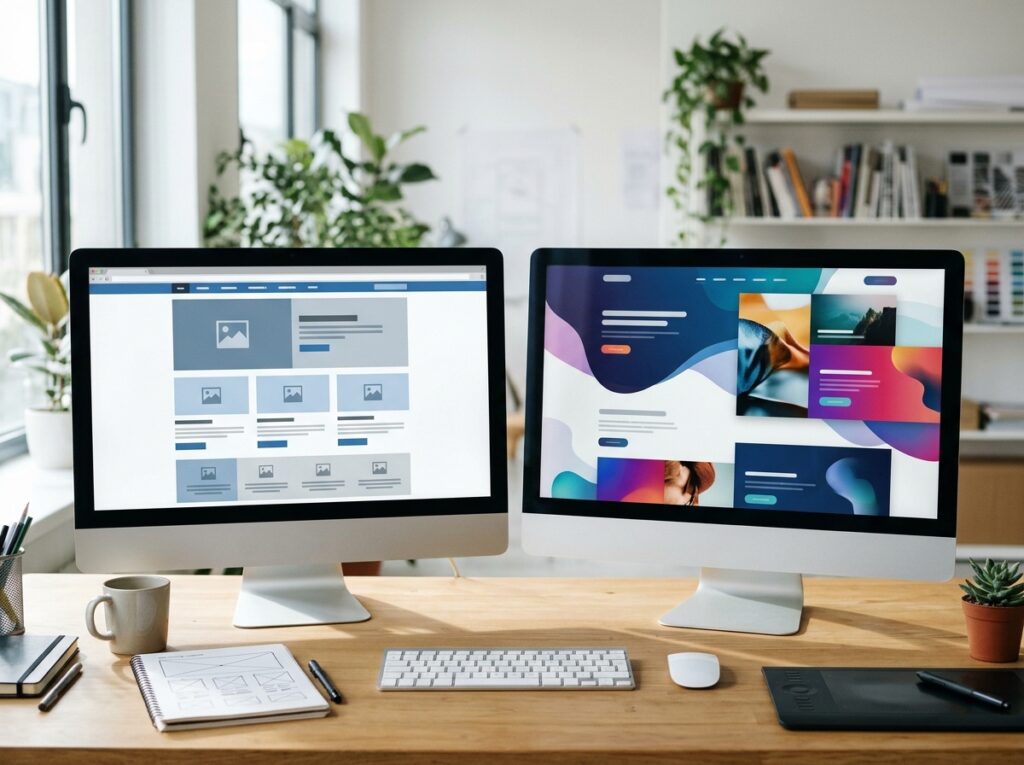
The Honest Comparison
Six factors decide most projects. Here is how the two routes compare on each.
Cost. The template is the cheaper route upfront, without question: a modest subscription or one-off fee, plus your own time to fill it in. Custom design costs more at the start because you are paying for thinking as well as building. Over several years, though, the gap narrows — template fees recur, add-ons accumulate, and a site you outgrow must be replaced rather than extended. Judge both on cost over the life of the site, not the first invoice.
Speed to launch. A template can be live within days if your content is ready. A custom site takes weeks or longer, because discovery, design and development happen in sequence. If you need a web presence for an imminent launch, opening or event, that difference can settle the question on its own.
Flexibility. Templates let you change colours, fonts, images and layouts within limits their designer set. A custom site can be shaped around almost any requirement: unusual booking flows, price calculators, members’ areas, or links to the other systems your business runs on. If your model is standard, template limits may never bite. If it is not, they bite quickly.
Uniqueness. Thousands of businesses may use the same popular template, and customers notice familiar layouts. Skilled customisation softens that, but the underlying bones stay recognisable. It is telling that the web design trends for 2026 reward distinctiveness — original, brand-led design stands out precisely because templates are everywhere. A custom site is one of one, which matters most in crowded, image-led markets.
Scalability. Templates handle growth within their platform’s plans — more pages, products and traffic — until you reach a ceiling the platform will not lift. A custom site can be extended in whatever direction the business grows, though each addition is a small project in itself. Neither route is limitless; the question is whose limits you would rather live with.
Maintenance. With a template platform, updates, security and backups are handled for you — a genuine advantage if you have no technical help. A custom site needs someone responsible for it: software updates, monitoring and occasional fixes, usually through a care arrangement with your designer. Whichever route you take, maintenance ignored is a site that quietly deteriorates.
Who Each Option Suits
Choose a template if you are just starting out, your needs are standard — a few pages, a contact form, perhaps a simple shop — and getting online quickly matters more than standing out. Many successful businesses start exactly this way and upgrade later, once they know what their website really needs to do. Choose custom if the website is central to how you win business: if you rely on it for bookings, sales or enquiries, if your process fits no standard mould, or if your market is competitive enough that looking like everyone else costs you work. The more your site has to do, the stronger the case for building it properly.

The Middle Path: A Template, Customised
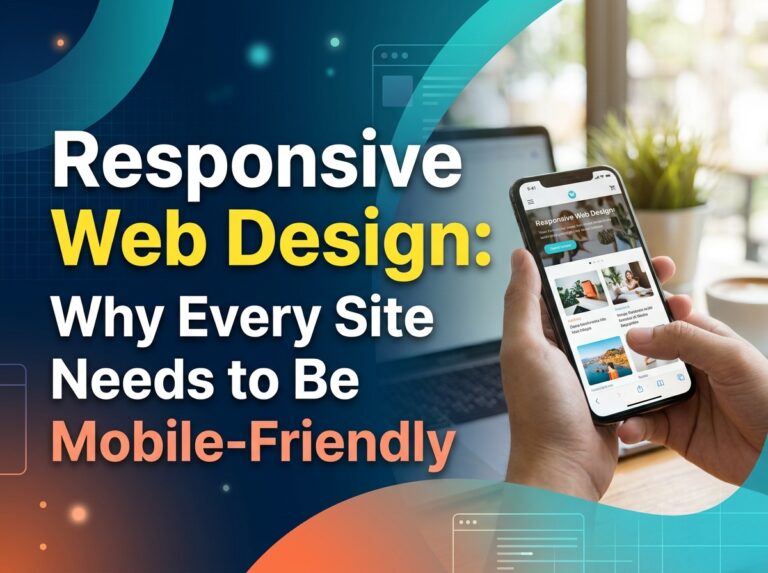
You do not have to choose between entirely off-the-shelf and entirely bespoke. A semi-custom build starts from a quality template or platform, then a designer adapts it properly: your brand applied with care, layouts adjusted to your content, key pages redesigned, unnecessary parts removed. You keep most of a template’s speed and savings while gaining much of the polish and fit of custom work. It suits businesses that have outgrown a do-it-yourself site but are not ready for a full bespoke build. One requirement never changes, whichever base you start from: responsive web design, so the site works beautifully on phones rather than treating the mobile version as an afterthought.
Questions to Ask Before You Decide
Work through these honestly, and the right route usually becomes obvious:
- How central is the website to winning business?
- Do I need any feature a standard template cannot provide?
- How soon must the site be live?
- What will each option cost over three years, not three months?
- Who will update and maintain the site after launch?
- Is the site likely to need new features or a new direction within two years?
Frequently Asked Questions
Is a template website bad for search engines?
Not inherently. Search engines rank content, usefulness and performance, not the method used to build a site. A well-filled, well-kept template can perform perfectly well, while a neglected custom site can perform poorly.
Can I move from a template to a custom website later?
Yes — many businesses do exactly that. Your content, images and domain name can move across; the design itself usually cannot, so treat the template as a successful first chapter rather than a foundation you must keep forever.
Does custom always mean better?
No. A custom site built without clear goals can underperform a sensible template. The method matters less than the thinking behind it, which is why honest advice at the start is worth more than either label.
The Right Answer Is the One That Fits
There is no universally correct choice — only the right one for your business, your budget and your plans. A template gets you online fast; a custom site gives you a platform built to grow. If you would like an honest assessment of which route fits you, Designores can talk it through: our web design services cover both template customisation and fully bespoke builds.

One Comment