Logo Protecting Tips: Trademarking and Copyright Basics

Your logo is often the first thing customers learn to recognise — and one of the easiest assets to leave unprotected. Many owners assume the law has it covered: they created the logo, or paid for it, so surely it is theirs. In reality, copyright and trademark protect two different things, and a gap in either leaves your mark exposed.
This guide covers the trademark logo basics in plain language. One caution first: this is general information, not legal advice. Rules vary by country, so for any decision that matters, talk to an intellectual property lawyer where you trade.
Copyright and Trademark Do Different Jobs
Copyright protects creative work. When an original logo is designed, copyright generally arises automatically and covers the artwork itself — it stops others simply copying that artwork. It does not stop a competitor trading under a similar-looking mark of their own.
A trademark does the other job: it protects a sign used in trade — a name, a logo, or both — that tells customers whose goods or services these are. Registration is not automatic; you apply for it. In return, a registered trademark gives you a clear right to the mark for the goods and services in your registration, and a stronger position if someone imitates it.
In short: copyright guards the artwork, the trademark guards the brand. A properly protected logo normally needs both.

Why an Unprotected Logo Is Exposed
Without a registration, your position rests on proving you used the mark first and built a reputation in it. Proving that is slow, uncertain and expensive — and meanwhile someone else may register a similar mark, leaving you as the one who has to change.
The real exposure is the cost of that change. Your logo sits at the centre of your brand identity — on your sign, packaging, website and invoices. Forced to replace it, you redesign and reprint everything at once and surrender recognition built over years.
Step 1: Search Before You Commit
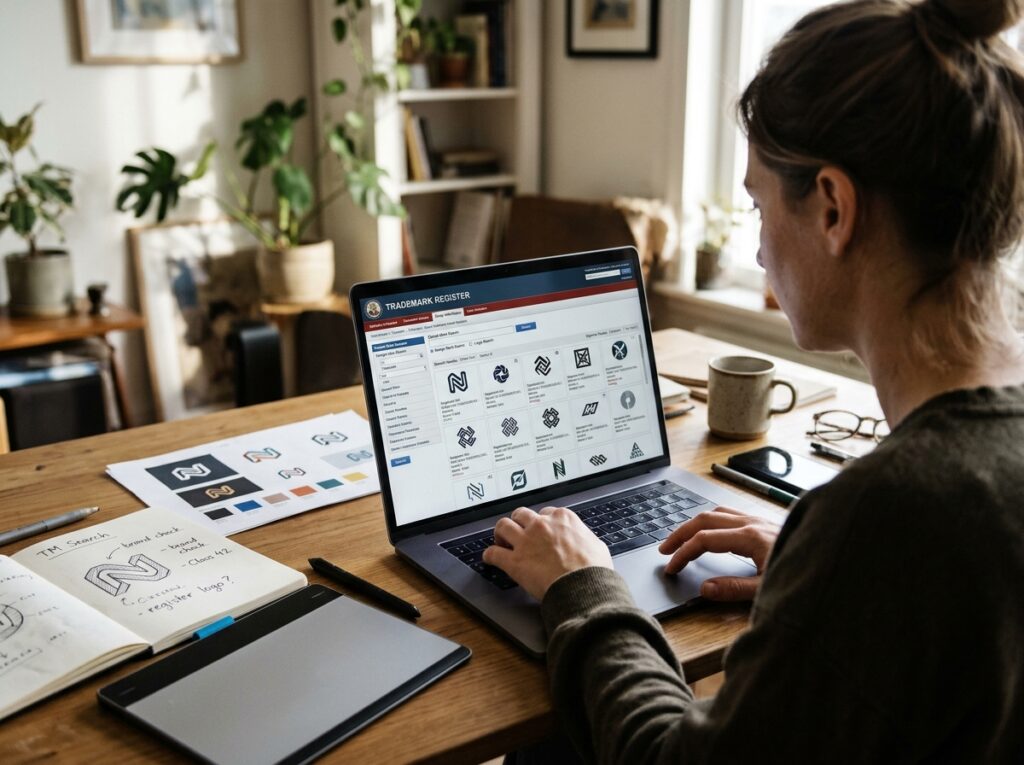
Before you print anything, order signage or build a website around a logo, search. Check your country’s trademark register for identical and similar marks on similar goods and services, then search the market itself. Marks can clash because they look alike or sound alike, not only when they are identical.
Skipping the trademark check is one of the costliest mistakes in branding, because every month of trading makes a forced change more expensive. If the search finds something close, adjust the design or take advice then — not after launch.
Step 2: Registering the Trademark
Registration means applying to your national intellectual property office. You file the mark itself and choose classes of goods and services. Protection only extends to those classes, so list what you trade in now and what you realistically plan to add. The office examines the application, and in most systems it is published for a period when others can oppose it, before registration for a set, renewable term.
Two symbols cause constant confusion. ™ signals that you claim a sign as your trademark, and it can be used whether or not the mark is registered. ® means the mark is registered — use it only once registration is granted. Using ® before then is improper, and in some countries an offence.
Who Owns the Copyright in Your Logo?
Paying for a design does not automatically transfer its copyright. In many countries the creator — your designer or agency — owns the copyright in the artwork unless your agreement assigns it to you or licenses it clearly. That is why the paperwork behind a logo design matters as much as the artwork: it should state who owns the final logo and which files you receive.
DIY tools and stock libraries raise the same issue from the other side: their licences allow limited use but transfer no ownership, and a mark built from stock or template elements is generally not registrable — it is not exclusively yours.

Mistakes That Leave Logos Exposed
Most protection problems are not legal subtleties — they are avoidable oversights:
- Using art you cannot own. Stock icons, clipart and generator elements are licensed, not owned — and the same artwork may sit inside hundreds of other logos.
- Assuming a company name or domain is enough. Business-name registration and domain names are separate systems. Neither gives trademark rights in your logo, nor stops a competitor using a similar one.
- Leaving it until later. The longer an unregistered logo trades, the more it costs to defend or replace. Filing early is almost always simpler.
Quick Checklist
- Register and market searches done before launch
- Copyright ownership of the artwork confirmed in writing
- No stock or template elements in the final mark
- Application filed for the classes you trade in
- ® used only on a registered mark; ™ for a claim
- Registration records and renewal dates stored safely
Frequently Asked Questions
Does copyright protect my logo automatically?
In many countries, copyright in original artwork arises when the work is created. But it protects the artwork, not your exclusive right to trade under the mark — and it may belong to your designer, not you.
Can I use the ® symbol as soon as I have applied?
No. ® indicates a registered trademark, so use it only once registration is granted. While an application is pending — or if you never apply — ™ signals your claim.
I registered my company name and bought the domain. Am I covered?
Not for your logo. Company registration, domain names and trademarks are separate systems. Only a trademark registration gives you rights in the mark itself.
Conclusion: Protection Is Part of Good Design
Protecting a logo is not red tape bolted on at the end; it is the final stage of designing one. Search before you commit, agree ownership in writing, and register the mark for what you actually sell. Done early, those steps turn your logo into an asset you own outright.
If you would like a logo built to be owned and registered from day one, Designores is a full-service design studio with 1,600+ projects completed for 900+ companies, creating original marks that are ready to protect. Get in touch when you are ready.