Logo Design Pricing: What Small Business Owners Should Expect
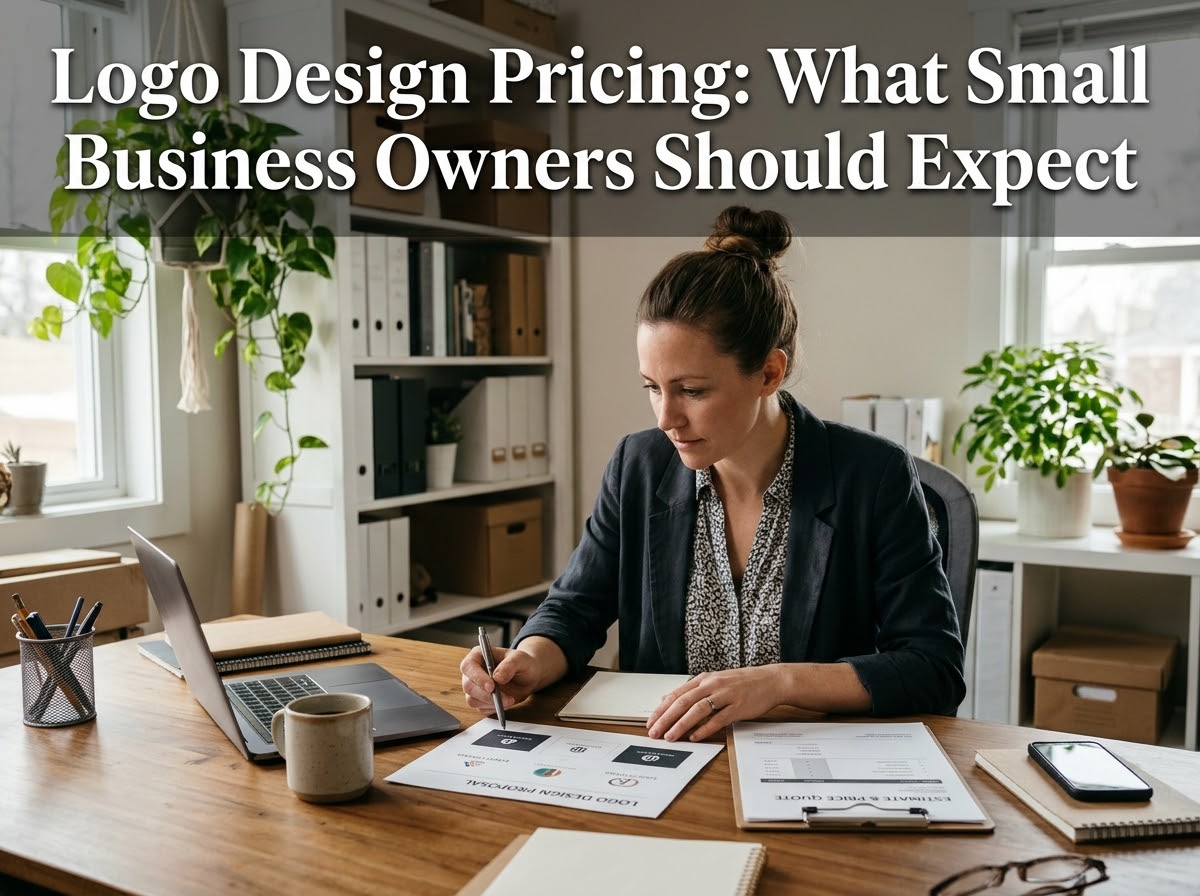
Ask around what a logo costs and you will hear everything from “almost nothing” to “a small fortune”. Both can be true — because “a logo” can mean a template with your name typed in, or a researched identity built to carry a business for years. This guide explains what small business owners should actually expect: the main routes, what each really gives you, what drives the price, and the questions to ask before you pay anyone.
The Main Routes — and What You Actually Get
DIY tools and templates.
The lowest investment of all. Browser-based tools and template marketplaces let you assemble a logo quickly, and for a short-lived project or a first placeholder that can be enough. What you do not get is originality or ownership: the same design may serve many businesses, files are often limited, and a template mark generally cannot be trademarked as yours.
Design competitions and very cheap marketplaces.
A small step up in spend. You receive many submissions, or a low-priced offer from a marketplace seller, and pick a favourite. The risk is what you cannot see: quality varies enormously, some work is recycled or copied, and proper files and usage rights are not always included.
Freelancers.
A modest, mid-level investment. A good freelancer offers original work, direct communication and proper files, usually for less than a studio thanks to smaller overheads. Standards vary far more than prices suggest, though — the portfolio and the process matter more than the quote.
Studios and agencies.
The premium route. You are paying for a team and a process: research, strategy before sketches, several developed concepts, structured revisions and a full identity system with guidelines. For businesses where the brand carries real commercial weight, that depth is the point.
If you are weighing these routes against a tight budget, affordable branding solutions exist at every level — the trick is knowing what each one leaves out.
What Actually Drives the Price
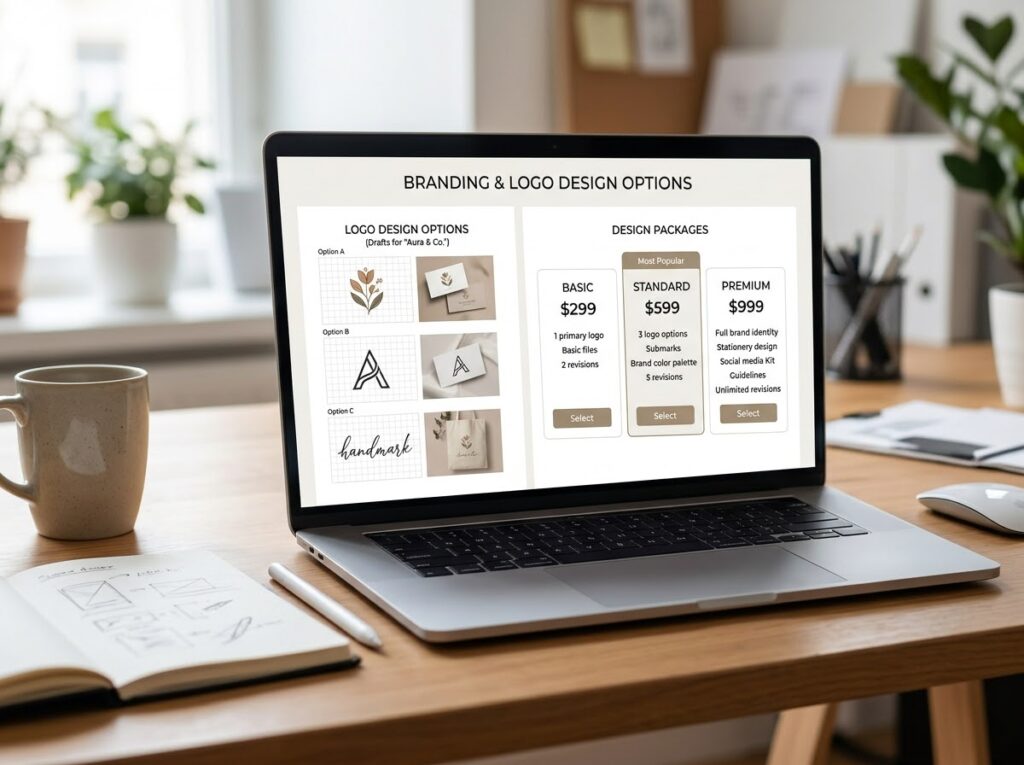
Two quotes for “a logo” can differ wildly because the work underneath differs — and a logo that must anchor a whole brand identity takes more work than a standalone mark. The main drivers:
- Research and strategy. Time spent understanding your market, competitors and customers before anything is drawn.
- Number of concepts. One idea polished, or several genuine directions to choose between.
- Revision rounds. How many rounds of changes are included — and what extra rounds cost.
- Deliverables and file formats. Vector source files, colour and mono versions, and formats for print, web and signage — or a single image file.
- Guidelines. A document recording colours, fonts, spacing and usage rules.
- Trademark considerations. Basic checks that your mark does not obviously clash with existing ones, and work original enough to be protectable.
- Experience and turnaround. Senior designers cost more; so does a deadline measured in days rather than weeks.
What a Proper Package Should Include
Whatever route you choose, know what “finished” looks like. A proper logo design package should leave you holding:
- The final logo in vector source formats (such as SVG, EPS or PDF), plus PNG and JPG versions for everyday use
- Primary, stacked or compact, and icon-only versions
- Colour, black and white versions
- The colour codes and font names used
- A short usage guide covering spacing, minimum size and backgrounds
- Written confirmation of your rights to use the design

Red Flags and False Economies
A price that assumes no process.
If nobody asks about your business, your customers or your competitors, you are buying a picture, not a logo.
Files that end at a JPG.
A single low-resolution image will fail at the printers, the sign-maker and the embroiderer — and recreating it later costs more than receiving it properly now.
No mention of rights or originality.
If the seller cannot say the work is original and yours to use, walk away. A copied mark can cost you the whole identity built on it.
Questions to Ask Before You Pay
A few direct questions, asked before any money moves, will tell you most of what a quote hides:
- What exactly is included — how many concepts, and how many revision rounds?
- Which file formats will I receive, and will I get the editable source files?
- Will the work be original, and can it be trademarked?
- What happens if I do not like any of the first concepts?
- Who owns the design once I have paid in full?
- How long will it take, and what do you need from me to start?
Quick Checklist
- Route chosen to match how long the business will trade under this logo
- Quote itemised in writing: concepts, revisions and deliverables
- Vector source files and everyday formats included
- Colour, mono and icon-only versions included
- Originality and usage rights confirmed in writing
- Timeline, deposit and balance terms agreed before work starts
Frequently Asked Questions
Why do quotes for the same logo vary so much?
Because the work underneath is different. Research, concepts, revision rounds, deliverables and experience are all priced in — or quietly left out. Compare quotes item by item, not headline by headline; the cheapest one usually excludes the parts that make a logo usable.
Is a cheap logo ever a sensible buy?
For a temporary project, a side venture you are testing, or a placeholder while the real business takes shape — yes, as long as you know its limits: a shared design, thin files, no trademark. The mistake is building a long-term business on a mark you cannot own.
Should I pay everything up front?
A deposit to begin and the balance on delivery is a common, fair pattern. Be cautious with anyone demanding full payment before you have seen a single concept — and expect a professional to ask for a deposit before starting.

Conclusion: Buy the Process, Not Just the Picture
Logo pricing makes sense once you see it as buying a process and a set of deliverables, not a single image. Match the route to the job the logo must do, insist on proper files and clear rights, and the price — at whatever level you choose — becomes a fair exchange rather than a gamble.
If you would like a clear, itemised quote, Designores is a full-service design studio with 1,600+ projects completed for 900+ companies. Get in touch and we will talk through the right package.