
Why Your Business Needs Professional Logo Design (Not DIY)
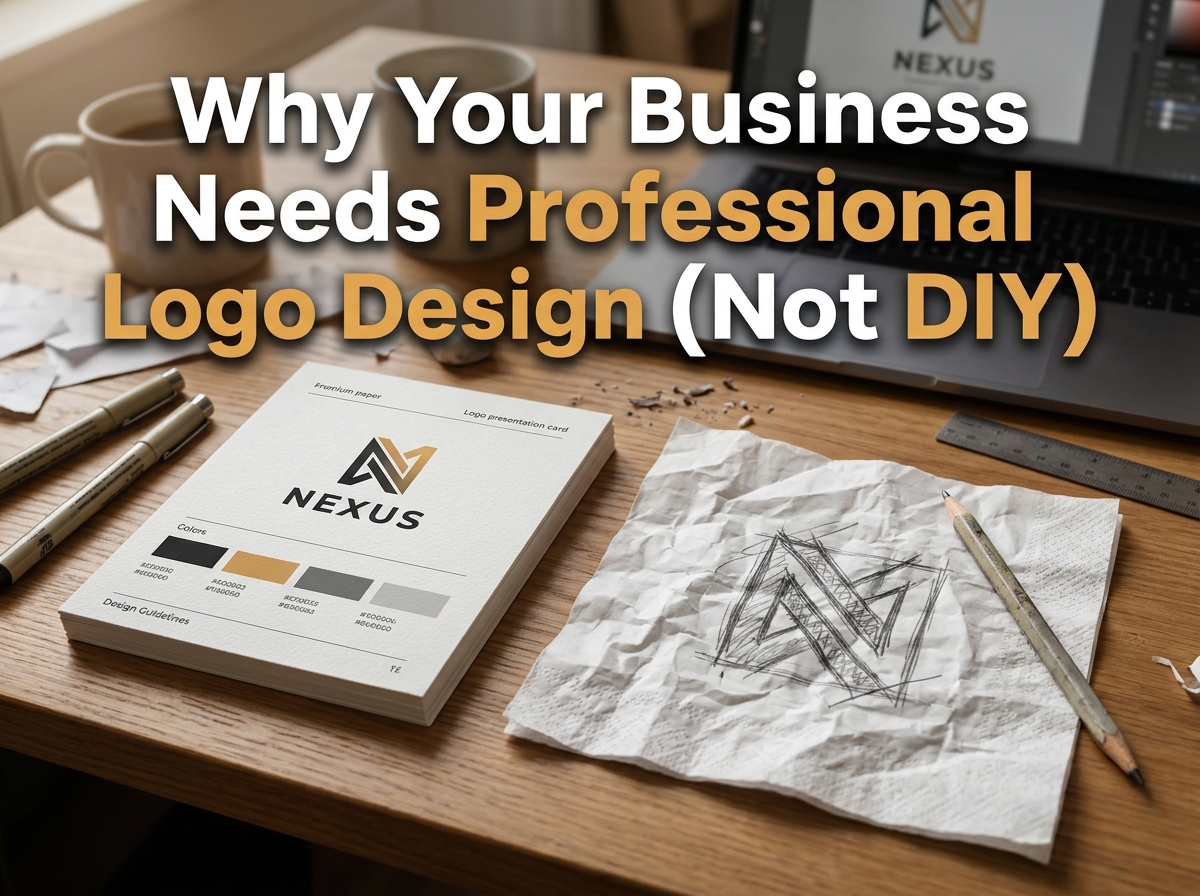
Your logo is the most-seen piece of branding you own. It sits on your website, your invoices, your social profiles, your packaging and your shopfront — often all in the same day. So it is understandable that free logo generators are tempting: answer a few questions, pick a template, download a mark in minutes. The problem is that a logo is not a quick task to tick off. It has to work for years, in every place your business shows up. That is a much bigger job than most DIY tools are built for, and it is where professional logo design earns its cost.
The Real Job of a Logo
A logo is not decoration. Its first job is recognition: customers should be able to spot your business at a glance and remember it afterwards. Its second job is trust. A polished, confident mark quietly signals that the business behind it is established and takes itself seriously; a rough one can plant doubt before a single word is read.
A logo also has to differentiate. If your mark looks like everyone else’s in your market, it does none of that work. And it has to perform at every size — crisp as a tiny 16-pixel icon in a browser tab, and just as clear stretched across a shop sign. A pretty picture on a screen is not enough. The mark is the centrepiece of your wider brand identity, and everything else in that identity leans on it.
Common DIY Logo Pitfalls
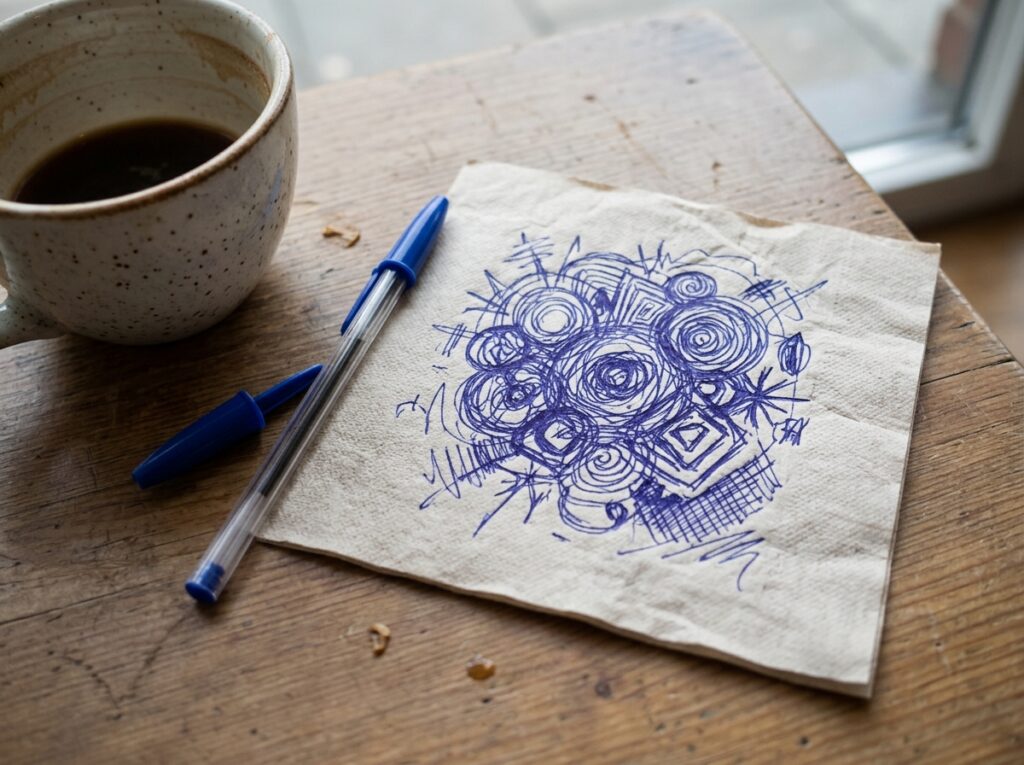
DIY tools are not useless — but they share the same traps, and most owners only spot them months later.
- Generic template marks. The template you choose is available to everyone. Hundreds of other businesses may be using the same symbol, sometimes in your own town or industry.
- No vector or scalable files. Many generators hand over a single image file. Enlarge it for signage or print and it blurs or pixelates, because it was never built to scale.
- Too many fonts, colours and effects. Gradients, shadows, outlines and three typefaces in one mark look busy, reproduce badly and become impossible to keep consistent.
- Breaks at small sizes. Fine lines and small details that look acceptable on a laptop screen vanish on a business card, an app icon or an embroidered shirt.
- Trend-chasing. A style that looks current this year can date very quickly. Redesigning every few years to chase fashion is expensive and erodes recognition.
- Licensing limits. Template assets often come with restrictions — the mark may not be trademarkable, and some licences limit how widely the artwork can be used.
What a Professional Actually Does Differently
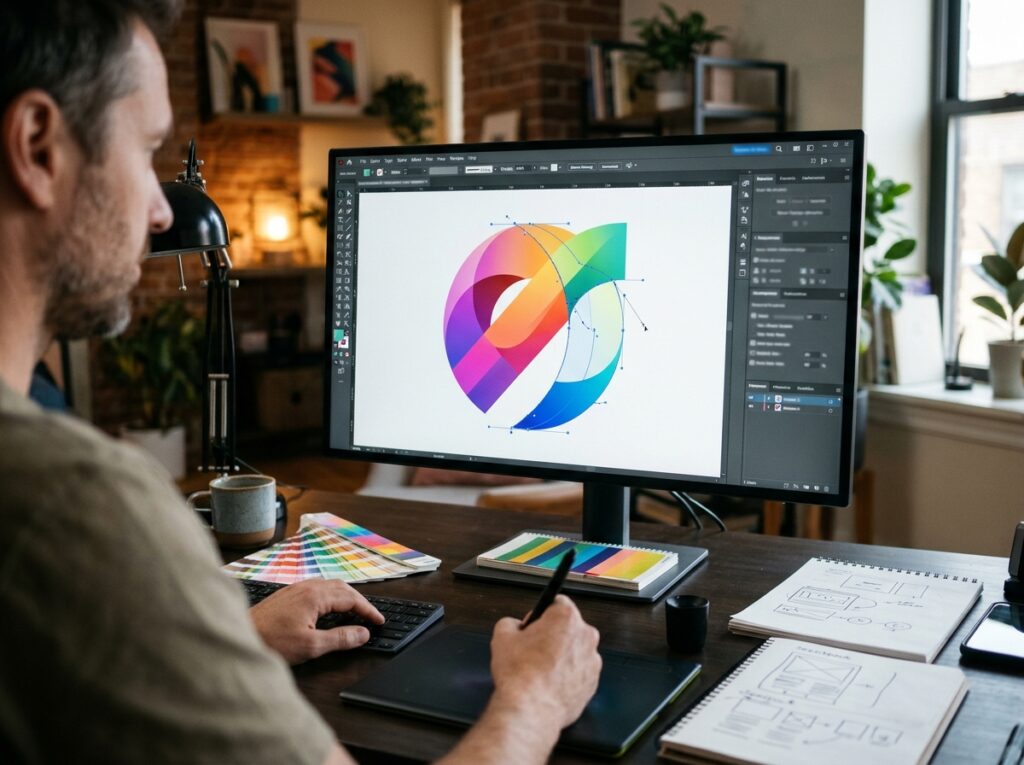
A professional designer is not simply someone with better software. The difference is process. It starts with a brief and research: your audience, your competitors, where the logo will be used and what it needs to say. From there the designer develops concepts — usually several directions — each with a rationale you can judge against your business goals, rather than a gallery of templates to scroll through.
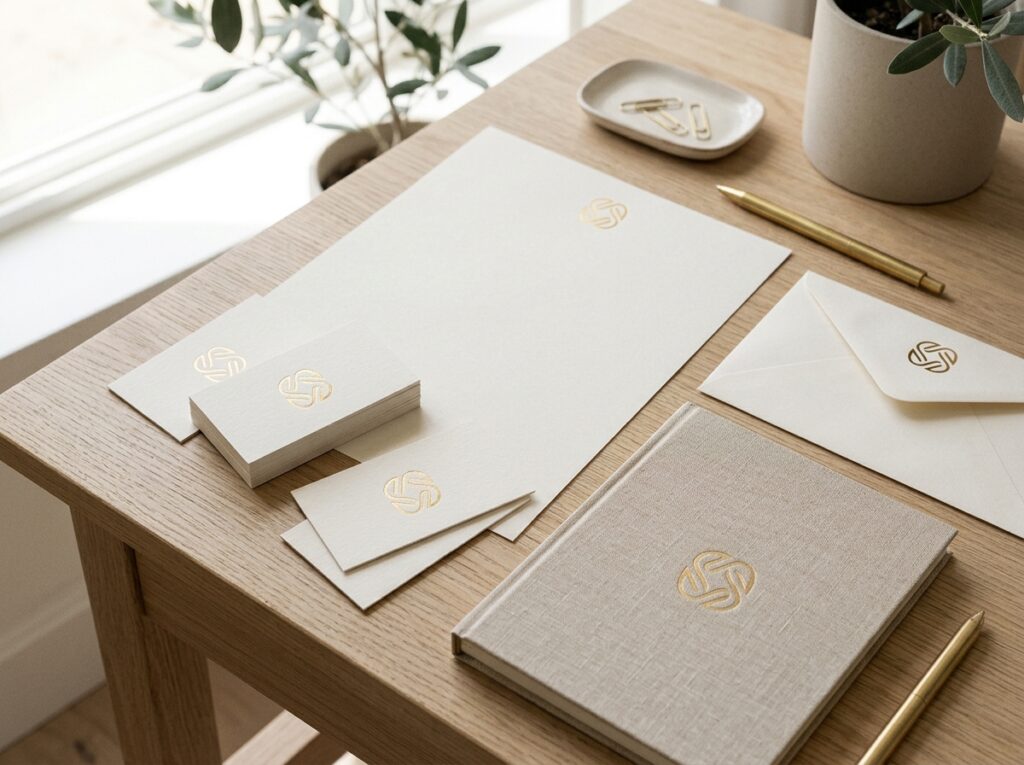
Craft matters too. A professional adjusts letterforms and spacing by hand, balances the mark so it reads at any size, and builds a responsive logo suite: a primary version, a stacked or horizontal version, and a simple icon or monogram for tight spaces. Around it sits a small system — defined colours, chosen fonts, clear-space and minimum-size rules — delivered as a full file set (vector files for print and signage, web-ready files, one-colour and reversed versions) with short guidelines so anyone using the logo uses it correctly. And because the work is original, created for your business alone, it is far better placed if you later want to protect it as a trademark.
The Hidden Costs of “Free”
A free logo can become the most expensive option. The common pattern: the business grows, the mark starts causing problems, and it has to be redone properly anyway — this time with signage, vehicle livery, uniforms and packaging to replace as well. Printers may charge to rebuild artwork that will not print cleanly. An inconsistent look across your website, cards and social profiles quietly undermines the recognition the logo exists to build. And none of this counts your own time: the evenings spent wrestling with a generator, exporting files and fixing problems are hours not spent running the business.
When DIY Is Acceptable
Honesty matters here: DIY has a legitimate place. A temporary project, a one-off event, an internal club or society, or testing a business idea before you invest in it — in those cases a simple template mark is a sensible, low-risk choice. The mistake is not using a DIY tool; it is letting a temporary mark quietly become the permanent face of a serious business. When the business is real and trading, the logo should be too.
Frequently Asked Questions
How much should a professional logo cost?
It varies widely by scope and market: a freelancer’s basic package, a studio project with research and a full identity system, and an agency rebrand are very different undertakings at very different prices. Judge quotes on what is included — concepts, revisions, file set, guidelines — not on the number alone.
How long does it take?
Most straightforward logo projects take a few weeks from brief to final files, depending on feedback speed and the number of concepts explored. A rushed logo usually shows it; allow time for the thinking stage.
What files should I receive?
At minimum: editable vector files (such as AI, EPS or SVG) for print and signage, PNG and JPG versions for everyday use, one-colour and reversed versions, and a note of your brand colours and fonts. Guidelines are a valuable extra.
Can a designer fix or polish my DIY logo?
Often, yes. A designer can redraw your existing mark properly — cleaning up the shapes, fixing spacing, creating the missing file formats and building the responsive versions. If the underlying idea is sound, polishing it keeps your recognition while removing the technical problems.
Conclusion: The Mark That Has to Work Everywhere
Your logo will be judged thousands of times, usually in a split second, long before anyone reads a word about your business. A DIY generator can give you a picture; a professional gives you a working asset — original, scalable, consistent and built to last. For a business you expect to grow, that difference pays for itself.
If you would like that kind of mark for your business, Designores can help: logo design is one of our core services, part of 1,600+ projects delivered for 900+ companies. Get in touch when you are ready.
Related reading: logo design trends




One Comment